hair coloring vs Kanjeevaram Silk Weaving: Side-by-Side Archival Comparison
Side-by-side comparison of hair coloring (Documented region, Global Archive) and Kanjeevaram Silk Weaving (Kanchipuram, Tamil Nadu, India) across cultural family, chronology, materials, instruments, and living vitality.
Documented in public ethnographic & archival sourcesDocumented region, Global Archive · Historical oral & textual attestation
Textile · Documented region, Global Archive▢▢▢▢ Not yet sourced
Handloom silk-weaving tradition of Kanchipuram combining mulberry silk from Karnataka with silver-gilt zari thread from Surat using the three-shuttle korvai technique.
Key Differences Between hair coloring and Kanjeevaram Silk Weaving
Geography & Origin: hair coloring is rooted in Documented region, Global Archive (attested Historical oral & textual attestation), whereas Kanjeevaram Silk Weaving originates in Kanchipuram, Tamil Nadu, India (attested 16th century).
Classification & Form: hair coloring belongs to the Textile family (Hair coloring, or hair dyeing, is the practice of changing the color of the hair on humans' heads.), while Kanjeevaram Silk Weaving is documented under Textile (Handloom silk-weaving tradition of Kanchipuram combining mulberry silk from Karnataka with silver-gilt zari thread from Surat using the three-shuttle korvai technique.).
Instruments & Materials: hair coloring is transmitted through regional performance and craft media; by contrast, Kanjeevaram Silk Weaving uses Throw-shuttle pit loom, Adai harness system, Three-shuttle korvai, Three-ply mulberry silk, Silver-gilt zari thread.
Heritage Recognition & Vitality: hair coloring is assessed as UNKNOWN (Documented in public ethnographic & archival sources), while Kanjeevaram Silk Weaving is assessed as THRIVING (National Inventory).
Shared Cultural & Historical Parallels
Both hair coloring and Kanjeevaram Silk Weaving belong to the Textile domain and transmit repertoire across generations through master-disciple lineage rather than commercial mass production.
Across Global Archive and India, both traditions demonstrate how local communities safeguard ancestral craft and performance knowledge through guild, temple, or village stewardship.
Frequently Asked Questions
What is the main difference between hair coloring and Kanjeevaram Silk Weaving?
hair coloring is a textile tradition from Documented region, Global Archive (Hair coloring, or hair dyeing, is the practice of changing the color of the hair on humans' heads.), whereas Kanjeevaram Silk Weaving is a textile tradition from Kanchipuram, Tamil Nadu, India (Handloom silk-weaving tradition of Kanchipuram combining mulberry silk from Karnataka with silver-gilt zari thread from Surat using the three-shuttle korvai technique.).
Where did hair coloring and Kanjeevaram Silk Weaving originate?
hair coloring originated in Documented region, Global Archive (Historical oral & textual attestation). Kanjeevaram Silk Weaving originated in Kanchipuram, Tamil Nadu, India (16th century).
What instruments or materials are used in hair coloring vs Kanjeevaram Silk Weaving?
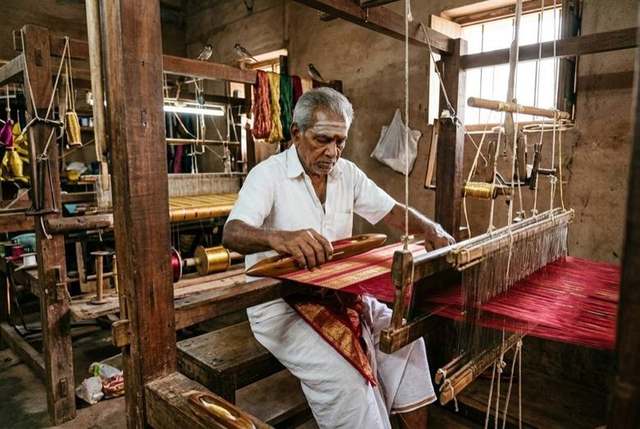 National InventoryKanchipuram, Tamil Nadu, India · 16th century