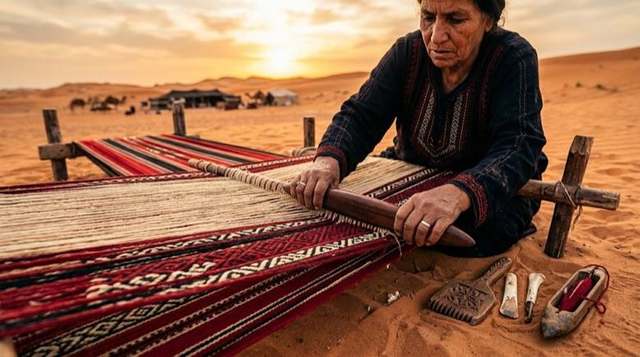
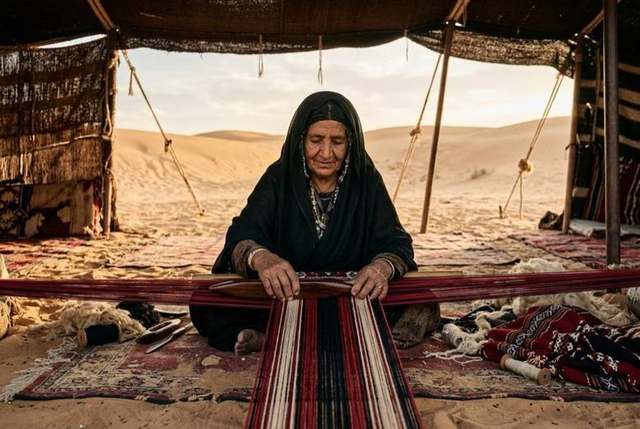
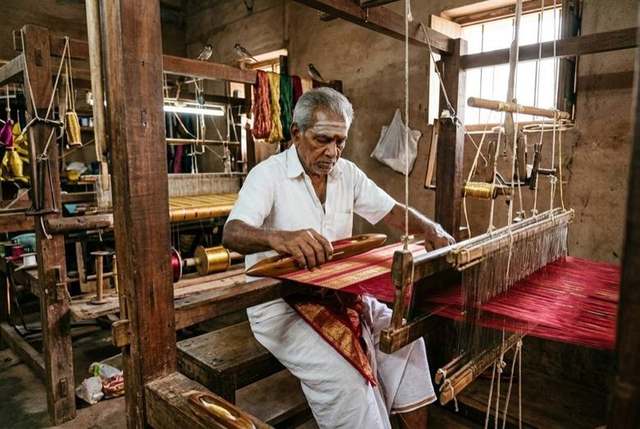
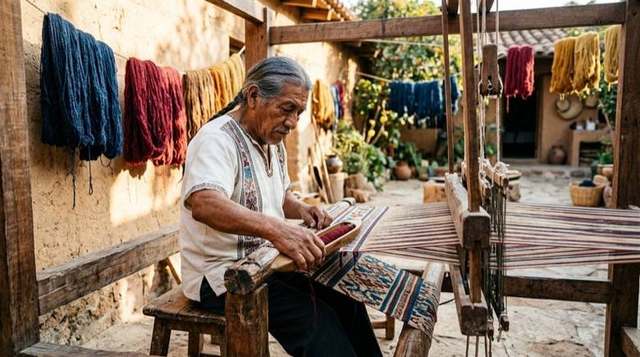
Side-by-side comparison of roller printing (Documented region, Global Archive) and Navajo Upright-Loom Weaving (Diné Diyogí) (Chinle, Two Grey Hills & Ganado, Navajo Nation, United States) across cultural family, chronology, materials, instruments, and living vitality.
| Dimension | Navajo Upright-Loom Weaving (Diné Diyogí) | |
|---|---|---|
| Tradition Name | roller printing | Navajo Upright-Loom Weaving (Diné Diyogí) |
| Native Script / Endonym | roller printing | Diyogí |
| Cultural Family | Textile | Textile |
| Primary Geography & Origin | Documented region, Global Archive | Chinle, Two Grey Hills & Ganado, Navajo Nation, United States |
| World Region | Global | Americas |
| First Attested / Era | Historical oral & textual attestation | 17th century |
| UNESCO & Inventory Status | Documented in public ethnographic & archival sources | National Inventory |
| Vitality Assessment | ▢▢▢▢ Not yet sourced | ■■■□ Stable |
| Instruments & Accompaniment | Traditional regional accompaniment | Upright timber loom, Oak weaving batten (bee nik'i'nilłlish), Wooden weaving fork |
| Materials & Medium | Regional performance / craft media | Navajo-Churro sheep wool, Yucca-root soap, Rabbitbrush, walnut & lichen dyes |
| Practitioner Lineages | Regional bearer community | Diné Master Weavers of Two Grey Hills, Ganado, Chinle & Teec Nos Pos |
| Cited Archival Sources | 1 verified sources | 9 verified sources |
roller printing is a textile tradition from Documented region, Global Archive (Roller printing, also called cylinder printing or machine printing, on fabrics is a textile printing process patented by Thomas Bell of Scotland in 1783 in an attempt to reduce the cost of the earlier copperplate printing.), whereas Navajo Upright-Loom Weaving (Diné Diyogí) is a textile tradition from Chinle, Two Grey Hills & Ganado, Navajo Nation, United States (Diné vertical-frame loom tapestry weaving of the Colorado Plateau using hand-carded Navajo-Churro sheep wool and desert plant dyes in geometric Two Grey Hills, Ganado, and Chief Blanket patterns.).
roller printing originated in Documented region, Global Archive (Historical oral & textual attestation). Navajo Upright-Loom Weaving (Diné Diyogí) originated in Chinle, Two Grey Hills & Ganado, Navajo Nation, United States (17th century).
roller printing uses traditional regional instruments and media. Navajo Upright-Loom Weaving (Diné Diyogí) uses Upright timber loom, Oak weaving batten (bee nik'i'nilłlish), Wooden weaving fork, Navajo-Churro sheep wool, Yucca-root soap, Rabbitbrush, walnut & lichen dyes.
roller printing heritage status: Documented in public ethnographic & archival sources. Navajo Upright-Loom Weaving (Diné Diyogí) heritage status: National Inventory.
A free public archive of the world’s living and endangered cultural traditions — documented with primary sources, geographic coordinates, and open-licensed photography. Two rooms, one wall. The door is open.
folkroom — Archive of Living Traditions · Text CC BY-SA 4.0 · Images credited & licensed individually
Open commons: Wikimedia Commons · UNESCO ICH · Openverse · Flickr CC · Wikidata · No trackers · No ads