Opening room…
Head-to-Head Archival Dossier · Textile
swivel weave vs Navajo Upright-Loom Weaving (Diné Diyogí): Side-by-Side Archival Comparison
Side-by-side comparison of swivel weave (Documented region, Global Archive) and Navajo Upright-Loom Weaving (Diné Diyogí) (Chinle, Two Grey Hills & Ganado, Navajo Nation, United States) across cultural family, chronology, materials, instruments, and living vitality.
12-Point Archival Comparison Table: swivel weave vs Navajo Upright-Loom Weaving (Diné Diyogí)
Study & Syllabus Export Tools · CC BY-SA 4.0
| Dimension | 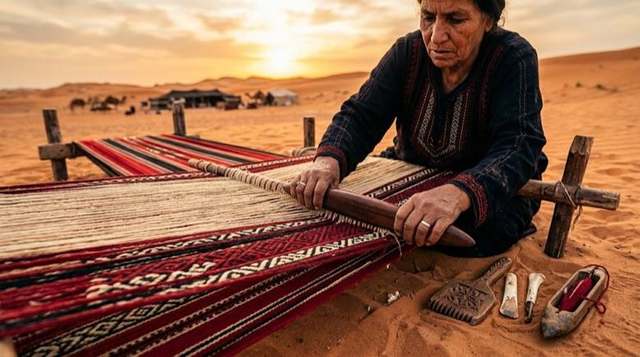 Navajo Upright-Loom Weaving (Diné Diyogí) | |
|---|---|---|
| Tradition Name | swivel weave | Navajo Upright-Loom Weaving (Diné Diyogí) |
| Native Script / Endonym |
Key Differences Between swivel weave and Navajo Upright-Loom Weaving (Diné Diyogí)
- Geography & Origin: swivel weave is rooted in Documented region, Global Archive (attested Historical oral & textual attestation), whereas Navajo Upright-Loom Weaving (Diné Diyogí) originates in Chinle, Two Grey Hills & Ganado, Navajo Nation, United States (attested 17th century).
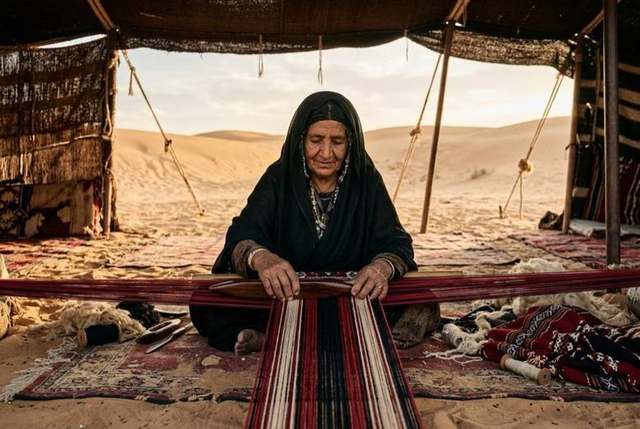
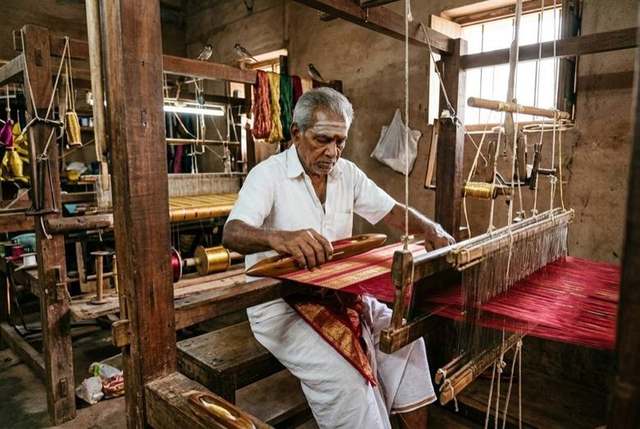
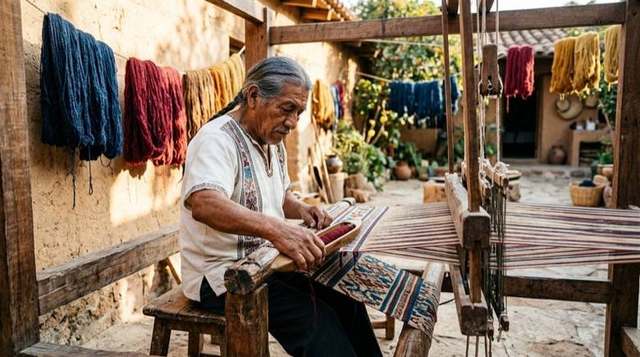
- Classification & Form: swivel weave belongs to the Textile family (The swivel weave is a weaving technique that incorporates a decorative element into the fabric by using small shuttles that insert additional weft thread around selected warp threads, while the main weft thread forms the fabric's structure.…), while Navajo Upright-Loom Weaving (Diné Diyogí) is documented under Textile (Diné vertical-frame loom tapestry weaving of the Colorado Plateau using hand-carded Navajo-Churro sheep wool and desert plant dyes in geometric Two Grey Hills, Ganado, and Chief Blanket patterns.).
- Instruments & Materials: swivel weave is transmitted through regional performance and craft media; by contrast, Navajo Upright-Loom Weaving (Diné Diyogí) uses Upright timber loom, Oak weaving batten (bee nik'i'nilłlish), Wooden weaving fork, Navajo-Churro sheep wool, Yucca-root soap, Rabbitbrush, walnut & lichen dyes.
- Heritage Recognition & Vitality: swivel weave is assessed as UNKNOWN (Documented in public ethnographic & archival sources), while Navajo Upright-Loom Weaving (Diné Diyogí) is assessed as STABLE (National Inventory).
Shared Cultural & Historical Parallels
- Both swivel weave and Navajo Upright-Loom Weaving (Diné Diyogí) belong to the Textile domain and transmit repertoire across generations through master-disciple lineage rather than commercial mass production.
- Across Global Archive and United States, both traditions demonstrate how local communities safeguard ancestral craft and performance knowledge through guild, temple, or village stewardship.
Frequently Asked Questions
What is the main difference between swivel weave and Navajo Upright-Loom Weaving (Diné Diyogí)?
swivel weave is a textile tradition from Documented region, Global Archive (The swivel weave is a weaving technique that incorporates a decorative element into the fabric by using small shuttles that insert additional weft thread around selected warp threads, while the main weft thread forms the fabric's structure.…), whereas Navajo Upright-Loom Weaving (Diné Diyogí) is a textile tradition from Chinle, Two Grey Hills & Ganado, Navajo Nation, United States (Diné vertical-frame loom tapestry weaving of the Colorado Plateau using hand-carded Navajo-Churro sheep wool and desert plant dyes in geometric Two Grey Hills, Ganado, and Chief Blanket patterns.).
Where did swivel weave and Navajo Upright-Loom Weaving (Diné Diyogí) originate?
swivel weave originated in Documented region, Global Archive (Historical oral & textual attestation). Navajo Upright-Loom Weaving (Diné Diyogí) originated in Chinle, Two Grey Hills & Ganado, Navajo Nation, United States (17th century).
What instruments or materials are used in swivel weave vs Navajo Upright-Loom Weaving (Diné Diyogí)?
swivel weave uses traditional regional instruments and media. Navajo Upright-Loom Weaving (Diné Diyogí) uses Upright timber loom, Oak weaving batten (bee nik'i'nilłlish), Wooden weaving fork, Navajo-Churro sheep wool, Yucca-root soap, Rabbitbrush, walnut & lichen dyes.
Are swivel weave and Navajo Upright-Loom Weaving (Diné Diyogí) recognized by UNESCO?
swivel weave heritage status: Documented in public ethnographic & archival sources. Navajo Upright-Loom Weaving (Diné Diyogí) heritage status: National Inventory.