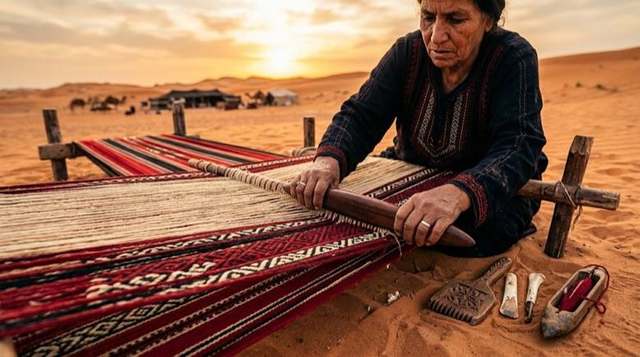
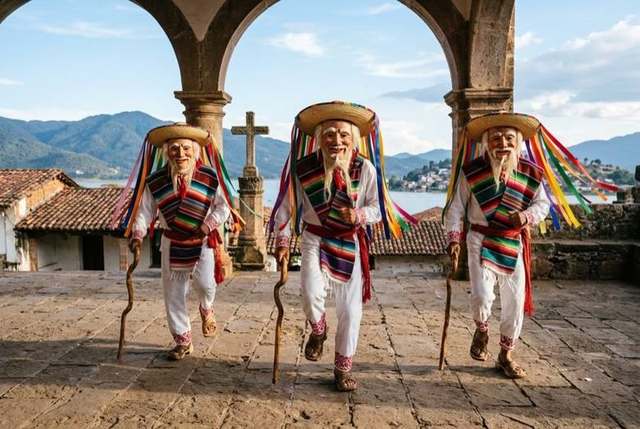
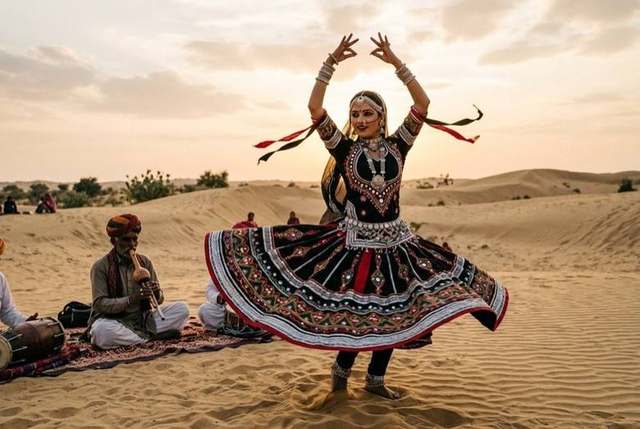
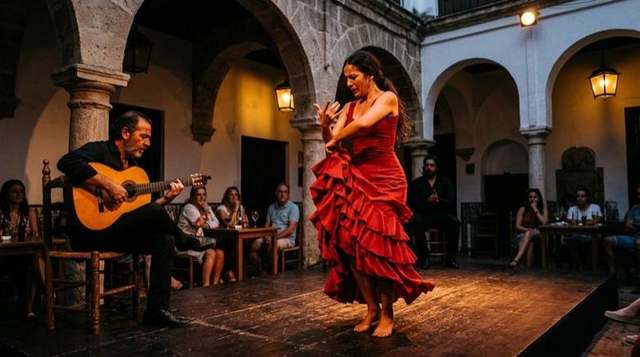
Side-by-side comparison of Koto Gadang embroidery (Indonesia, Indonesia) and Navajo Upright-Loom Weaving (Diné Diyogí) (Chinle, Two Grey Hills & Ganado, Navajo Nation, United States) across cultural family, chronology, materials, instruments, and living vitality.
| Dimension | Navajo Upright-Loom Weaving (Diné Diyogí) | |
|---|---|---|
| Tradition Name | Koto Gadang embroidery | Navajo Upright-Loom Weaving (Diné Diyogí) |
| Native Script / Endonym | Sulaman Koto Gadang | Diyogí |
| Cultural Family | Textile | Textile |
| Primary Geography & Origin | Indonesia, Indonesia | Chinle, Two Grey Hills & Ganado, Navajo Nation, United States |
| World Region | Indonesia | Americas |
| First Attested / Era | Historical oral & textual attestation | 17th century |
| UNESCO & Inventory Status | Documented in public ethnographic & archival sources | National Inventory |
| Vitality Assessment | ▢▢▢▢ Not yet sourced | ■■■□ Stable |
| Instruments & Accompaniment | Traditional regional accompaniment | Upright timber loom, Oak weaving batten (bee nik'i'nilłlish), Wooden weaving fork |
| Materials & Medium | Regional performance / craft media | Navajo-Churro sheep wool, Yucca-root soap, Rabbitbrush, walnut & lichen dyes |
| Practitioner Lineages | Indonesia bearer community | Diné Master Weavers of Two Grey Hills, Ganado, Chinle & Teec Nos Pos |
| Cited Archival Sources | 1 verified sources | 9 verified sources |
Koto Gadang embroidery is a textile tradition from Indonesia, Indonesia (Sulaman Koto Gadang adalah teknik kerajinan tangan menghias kain dengan benang yang dikerjakan secara tradisional oleh masyarakat Koto Gadang, salah satu nagari di Kabupaten Agam, Sumatera Barat.), whereas Navajo Upright-Loom Weaving (Diné Diyogí) is a textile tradition from Chinle, Two Grey Hills & Ganado, Navajo Nation, United States (Diné vertical-frame loom tapestry weaving of the Colorado Plateau using hand-carded Navajo-Churro sheep wool and desert plant dyes in geometric Two Grey Hills, Ganado, and Chief Blanket patterns.).
Koto Gadang embroidery originated in Indonesia, Indonesia (Historical oral & textual attestation). Navajo Upright-Loom Weaving (Diné Diyogí) originated in Chinle, Two Grey Hills & Ganado, Navajo Nation, United States (17th century).
Koto Gadang embroidery uses traditional regional instruments and media. Navajo Upright-Loom Weaving (Diné Diyogí) uses Upright timber loom, Oak weaving batten (bee nik'i'nilłlish), Wooden weaving fork, Navajo-Churro sheep wool, Yucca-root soap, Rabbitbrush, walnut & lichen dyes.
Koto Gadang embroidery heritage status: Documented in public ethnographic & archival sources. Navajo Upright-Loom Weaving (Diné Diyogí) heritage status: National Inventory.
A free public archive of the world’s living and endangered cultural traditions — documented with primary sources, geographic coordinates, and open-licensed photography. Two rooms, one wall. The door is open.
folkroom — Archive of Living Traditions · Text CC BY-SA 4.0 · Images credited & licensed individually
Open commons: Wikimedia Commons · UNESCO ICH · Openverse · Flickr CC · Wikidata · No trackers · No ads